
From studio to stage, faculty in music, theatre, and dance explore the performing arts as a tool for fostering human connections, healing, and growth in these podcasts.
- John Lindsey talks about singing, listening, and the relationship to healing
- Madeline Jazz Harvey explores the intersection of dance, research, and parenting
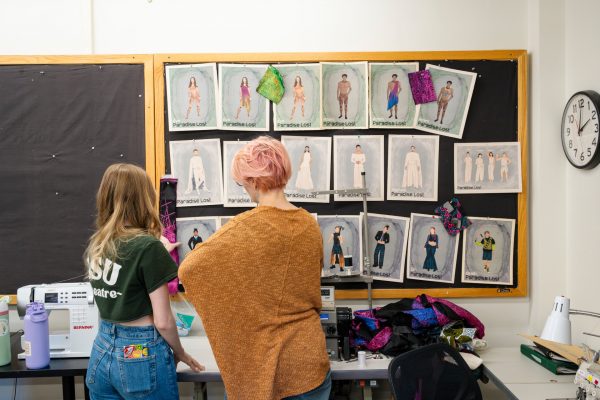
- Erin Carignan discusses costume design's impact as a powerful, nonverbal form of storytelling
- Ryan Claycomb shares how the emotional responses of audiences influence how political plays are being made right now
Singing as Connection
John Lindsey, assistant professor of voice at Colorado State University and CSU alum (B.M. ’11) invites listeners into a profoundly human conversation about singing, listening, and healing. For Lindsey, teaching voice isn’t just about technique. At the heart of his approach is a simple but powerful idea: listening is just as important as performing.
Drawing from his personal life, Lindsey recounts how receiving a diagnosis of complex post-traumatic stress disorder around the time his daughter was born transformed the way he listens to himself, to his child, and to his students. Going through the experience of being listened to reshaped how he understands connection and empathy. Rather than dictating outcomes, Lindsey cultivates safety, trust, and partnership over rigid instruction.
Intersection of Dance, Research, and Parenting
Madeline Jazz Harvey, associate professor of dance in the School of Music, Theatre, and Dance, discusses the intersection of dance, research, and parenting. Opening with the image of a ballerina’s tutu that no longer fastens over her pregnant belly, Harvey introduces the physical and emotional shifts that inspired her work. A dancer, scholar, and mother of two, Harvey sees movement as a powerful language during major life transitions.
Harvey developed a dance-based intervention designed to support emotional connection between caregivers and infants. Her pilot research addresses postpartum depression, which can have a lasting impact on well-being and relationships. She explains that dance gives the body a voice when words fall short, and early findings suggest that mindful movement may reduce symptoms of depression and anxiety.

How Costumes Shape the Stage
Meet Erin Carignan, associate professor of theatre at Colorado State University whose work bridges art, science, and teaching through costume design and production. The conversation explores costume design’s impact as a powerful, nonverbal form of storytelling that shapes characters, sparks conversation, and helps audiences feel empathy.
By teaching undergraduate students, writing textbooks like Dying for Entertainment, and documenting costume crafts techniques, she is committed to keeping traditional knowledge alive while utilizing new tools and technologies. Carignan’s work demonstrates how design, craft, and education help ensure those stories—and the artisans behind them—continue to endure.

Who is Theater For?
Alongside professor and senior associate dean Ryan Claycomb, we travel to Washington D.C.’s Arena Stage to explore how real stories and politics intersect in mainstream theaters. Drawing a parallel between performance and public life, Claycomb discusses how the emotional responses of audiences influence how political plays are being made right now.

Liberal Arts Impact
Colorado State University’s College of Liberal Arts is a vibrant community of artists, thinkers, storytellers, and scientists who examine the human experience. In these podcasts, our faculty share their areas of expertise and talk about why their work matters in our world today.
Faculty and staff recorded their podcasts with CSU's Center for Science Communication through the leadership of Associate Professor Jaime Jacobsen and her graduate students in the Department of Journalism and Media Communication.