

Political Science explores the dynamic intersection of power, policy, and human behavior, from real-world systems to the lessons learned through games.
In these podcasts, our political science faculty examine how people make decisions, negotiate, and exercise agency — providing insights that can guide us in building communities that are more just, inclusive, and effective.
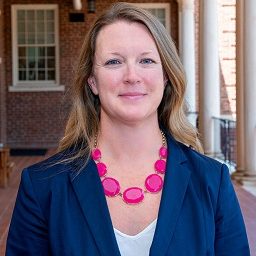
- Kristin Olofsson discusses her research to bring all stakeholders to the table to discuss natural resources policies.
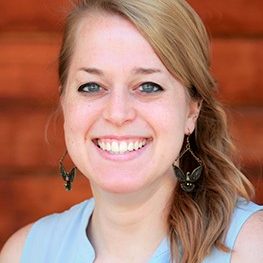
- Jessie Harney shares how investing in the health of the staff and inmates of correctional facilities creates safer systems.
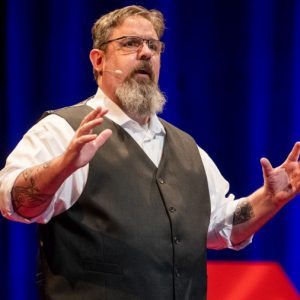
- James “Pigeon” Fielder shares his experience applying role-playing games are a powerful tool for understanding ourselves, our politics, and the systems we influence.
Representation in Environmental Policy
Drawing from her own experience navigating structural barriers as a first-generation student, Assistant Professor Kristin Olofsson examines who gets heard in decisions about natural resources, and who is left out. Her participatory research brings policymakers, ranchers, farmers, and tribal leaders together to share knowledge and craft more equitable, resilient policies. “What we’re doing matters,” she notes. “It’s bringing people together.” Olofsson’s teaching furthers this mission, equipping students to understand policy systems and envision more inclusive futures, a core focus of the College of Liberal Arts.
Well-Being in the Correctional System
Assistant Professor Jessie Harney highlights an often-overlooked truth: improving public safety starts with supporting the well-being of both incarcerated individuals and the correctional officers who work alongside them. Harney’s research challenges common stereotypes and draws on compelling, real-world stories to reveal the compassion, dedication, and pressures within carceral institutions, particularly during COVID. Through perspective-taking interventions and collaborative policy design, Harney demonstrates how investing in staff mental health and collective efficacy can create safer, more humane systems. Her work embodies the College of Liberal Arts’ commitment to understanding people, systems, and the potential for meaningful change.
Politics, Power, and the Lessons of Dungeons & Dragons
Political science instructor James “Pigeon” Fielder shows how the 50-year-old fantasy game of Dungeons & Dragons can illuminate real-world power, agency, and responsibility. Using concepts like the “magic circle” and “symbolic correspondence,” Fielder explains how players practice decision-making, confront consequences, and experiment with identity, all within a safe, imaginative space. Those same dynamics, he argues, shape political behavior: how people negotiate, lead, cooperate, and wield power. Through vivid examples from gaming tables, wargames, and even his mentoring work with inmates, Fielder reveals why play isn’t escapism at all. It’s a powerful tool for understanding ourselves, our politics, and the systems we influence.
Liberal Arts Impact
Colorado State University’s College of Liberal Arts is a vibrant community of artists, thinkers, storytellers, and scientists who examine the human experience. In these podcasts, our faculty share their areas of expertise and talk about why their work matters in our world today.
Faculty and staff recorded their podcasts with CSU's Center for Science Communication through the leadership of Associate Professor Jaime Jacobsen and her graduate students in the Department of Journalism and Media Communication.